New Dimensions: Objects of Industry, Craft, and Modernity
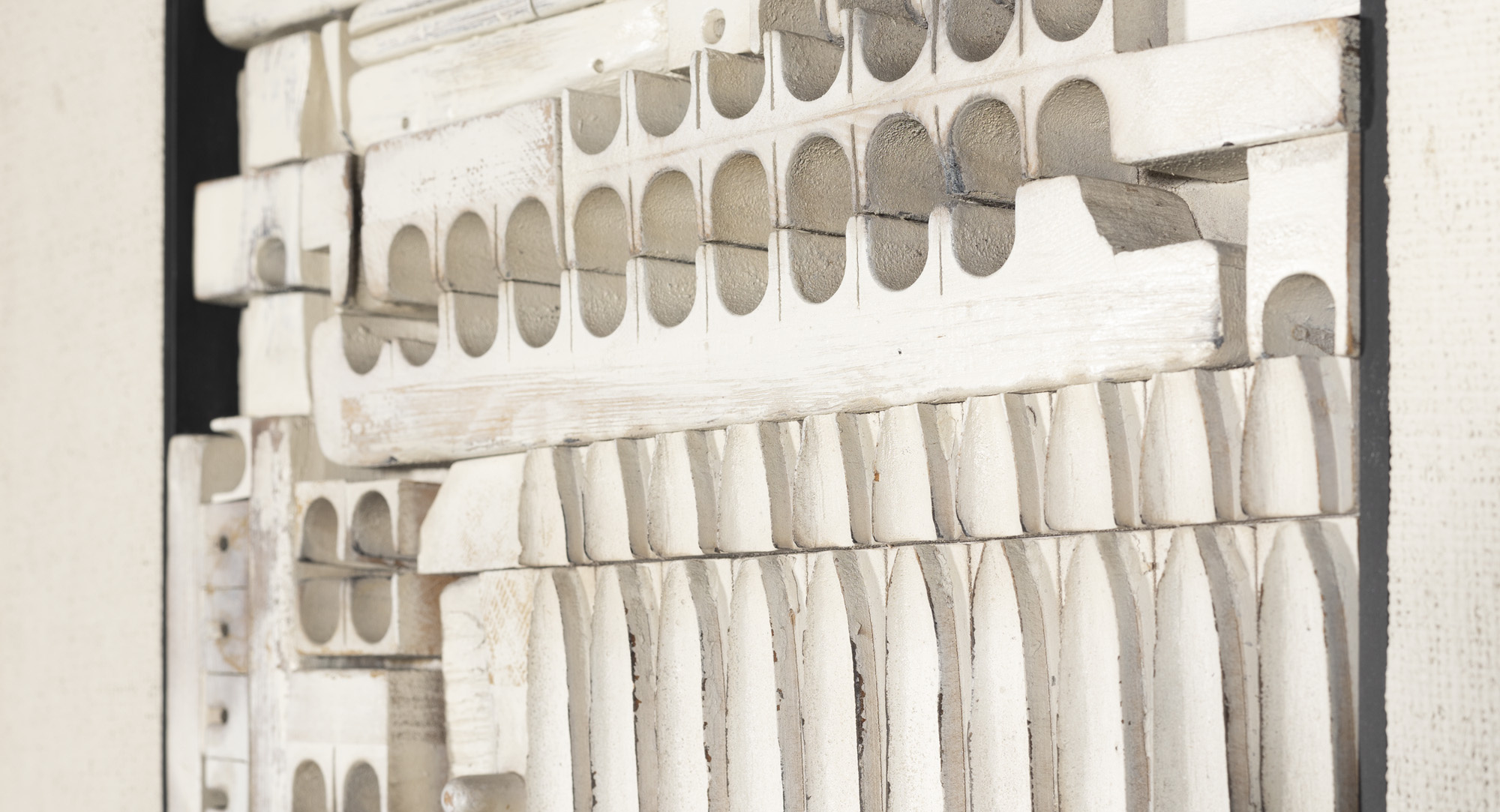
Abe Ajay (1919–1998). Construction #201. 1963. Mixed media construction. 27 x 25 in. The Marty O’Brien Collection of American Art.
American sculptors of the 20th century transformed their abstract experiments with color and geometry into three-dimensional form, incorporating new and traditional materials that defined the work of art beyond its compositional structure. From luminous suspended threads and kinetic Plexiglas constructions to textured reliefs and architectural assemblages, these works often fused materials drawn from drastically different contexts, including domestic handcraft, the industrial factory floor, commerce, and art history. For nearly three decades and between multiple regions, from industrial centers like Pittsburgh to coastal art hubs like New York, artists forged a distinctly American vocabulary with new and traditional materials alike, embracing innovation and a sense of avant-garde dynamism. Facing the radical technological and cultural shifts of a war-torn, increasingly automated age, these experiments yielded highly responsive forms both capturing, and disrupting, the sense of tension, order, harmony, and complexity at the center of modern life.
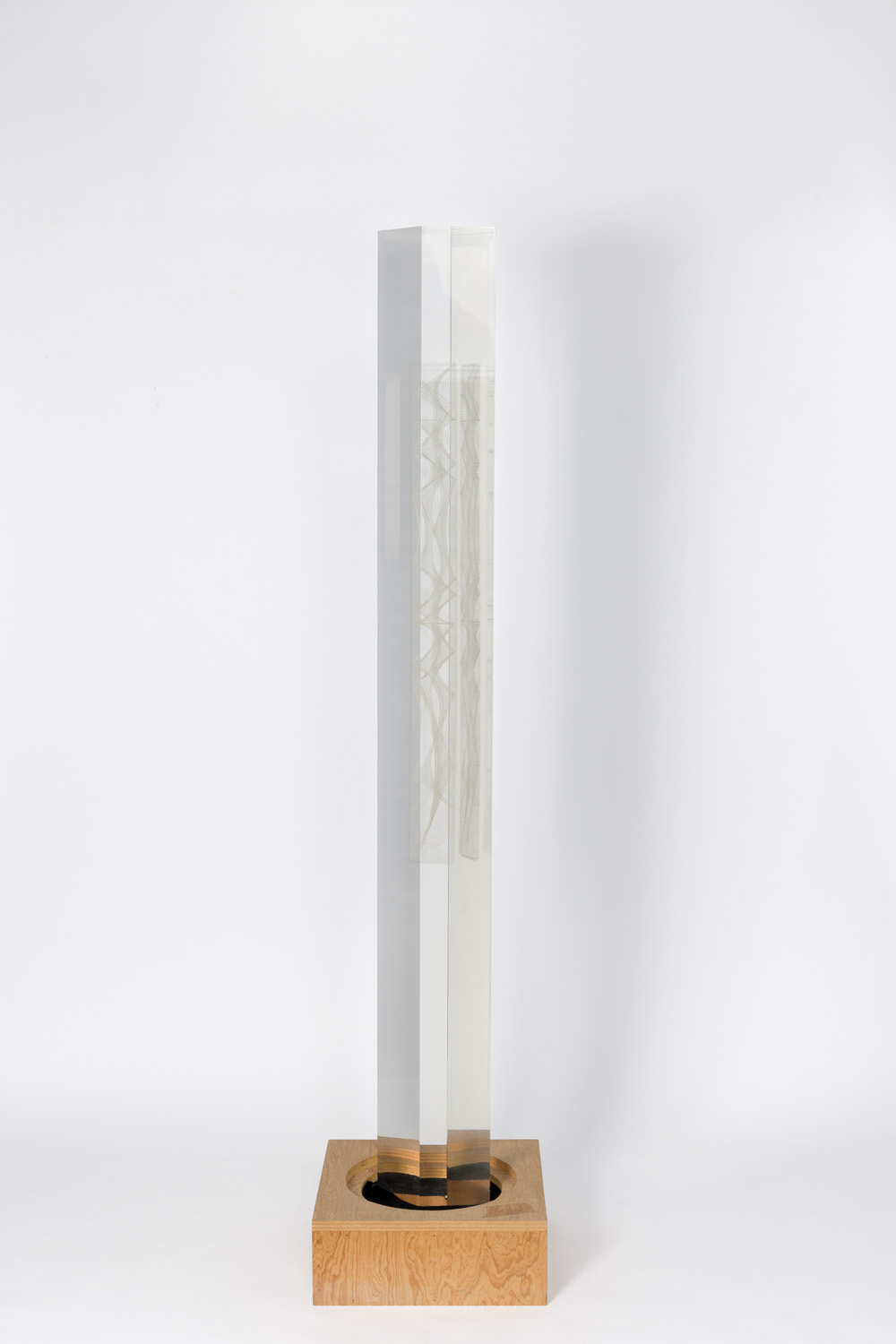
Sue Fuller (1914–2006). The Column. c. 1970. Lucite with white string on plywood stand. 72 x 8 x 3 in. The Marty O’Brien Collection of American Art.
Modernism’s tactile reinterpretations are particularly evident in the work of Sue Fuller, who elevated thread from a mere “feminine” domestic craft into a medium of structural and material exploration. Fuller’s early wood pieces evolved into glass compositions, culminating in geometric constructions embedded in clear resin as seen in The Column (c. 1970). Here, suspended threads appear to float in space, forming delicate, taut architectures both precise and ethereal. Early exposure to modernist art at the Carnegie International, followed by rigorous training at the Carnegie Institute of Technology (now Carnegie Mellon University) and Atelier 17 with Stanley William Hayter, instilled in her a philosophy of pushing a medium and material beyond its traditional boundaries.
Fuller’s experiments with embedding thread in resin in the 1960s anticipated the formal concerns of later artists working in Plexiglas and other synthetic media in the following decades. Mon Levinson, for example, developed optical investigations in layered Plexiglas reliefs, such as Stepped Shift I (1968). By manipulating transparency, light, and overlapping planes, Levinson created visual moiré patterns that shift with the viewer’s perspective. Levinson and Fuller share a rigorous attention to layering, transparency, or aggregated forms to produce a poetics often missing in traditional modernism. At the same time, Levinson’s work leaned heavily into technological advancements. He showed this work, made of light sheeting developed for aviation purposes in World War II, in 1968 at the Brooklyn Museum in an exhibition coordinated with Bell Labs, titled Some More Beginnings: Experiments in Art and Technology (E.A.T.). Levinson held a studio near Canal Street in the early 1960s where he regularly visited the neighboring fabrication stores for new materials. This led to his direct correspondence with product manufacturers.
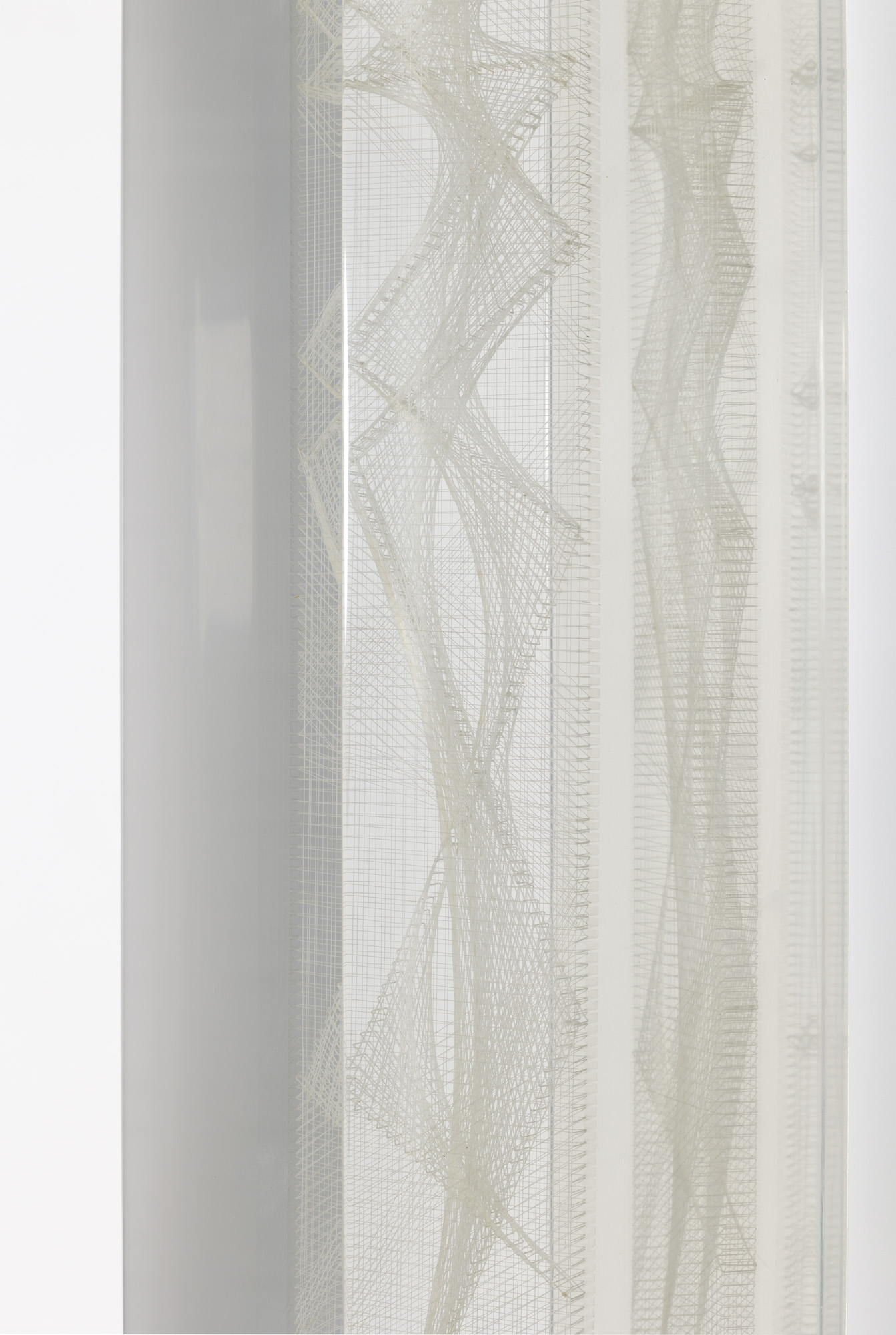
Sue Fuller (1914–2006). Detail of The Column. c. 1970.
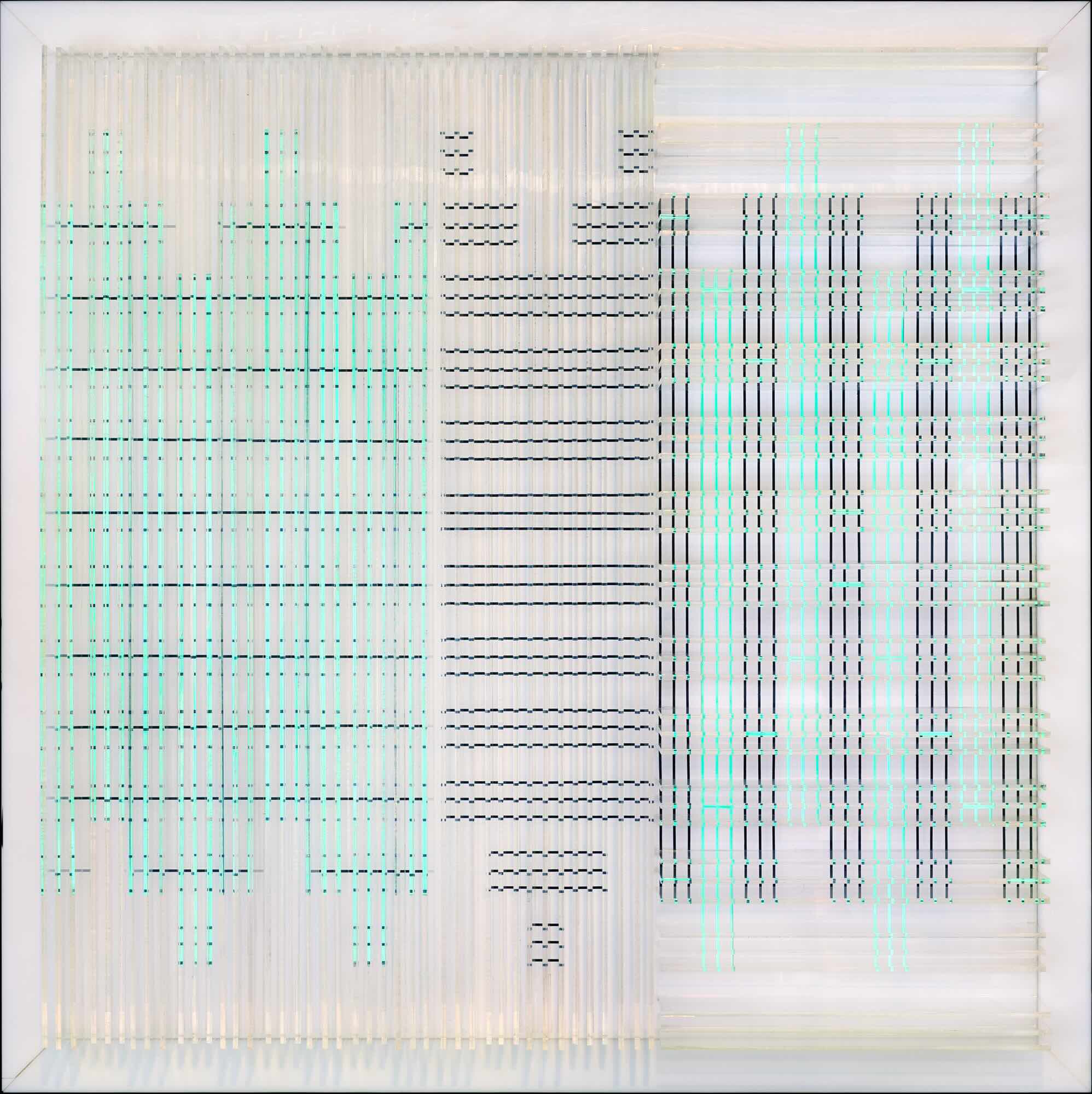
Mon Levinson (1926-2014). Stepped Shift I. 1968. Plexiglas and electroluminescent panel construction. 38 x 38 x 5 in. The Marty O’Brien Collection of American Art.
[….] these works fused materials drawn from drastically different contexts, including domestic handcraft, the industrial factory floor, and art history.
Within this context, Atelier 17 functioned as a crucial node of cross-media experimentation. Artists including Fuller and Peter Grippe translated lessons in printmaking into sculptural investigations and vice versa. Grippe, a sculptor and printmaker from Newton, Massachusetts directed the New York branch of Atelier 17 between 1951 and 1954. His layered, jagged sculptures informed the textures and spatial logic of his printmaking, where overlapping planes and energetic marks created illusions of depth. Prior to Atelier 17, Grippe also taught at the groundbreaking Black Mountain College in 1948, alongside artists like Josef and Anni Albers, Willem de Kooning, and Buckminster Fuller. The adjacency to assemblage, popularized at Black Mountain, can be seen in the intentionally jumbled shapes embedded in his freestanding and terracotta constructions (Untitled, 1934), producing forms that merged human and material histories.
Dorothy Dehner translated her early calligraphic works on paper into lyrical constructions in bronze and steel (like Bronze Sculpture, 1968), challenging expectations of female sculptors to work only with delicate materials. After divorcing sculptor David Smith in 1950, Dehner studied at the Atelier, deepening her experimental approach to both printmaking and sculpture. Alongside these lesser known figures, major names like Louise Nevelson also studied at Atelier 17, allowing for a non-hierarchical, collaborative atmosphere. Nevelson is represented in the collection with a relief sculpture in painted wood made later, Dawn’s Landscape XX (1975).
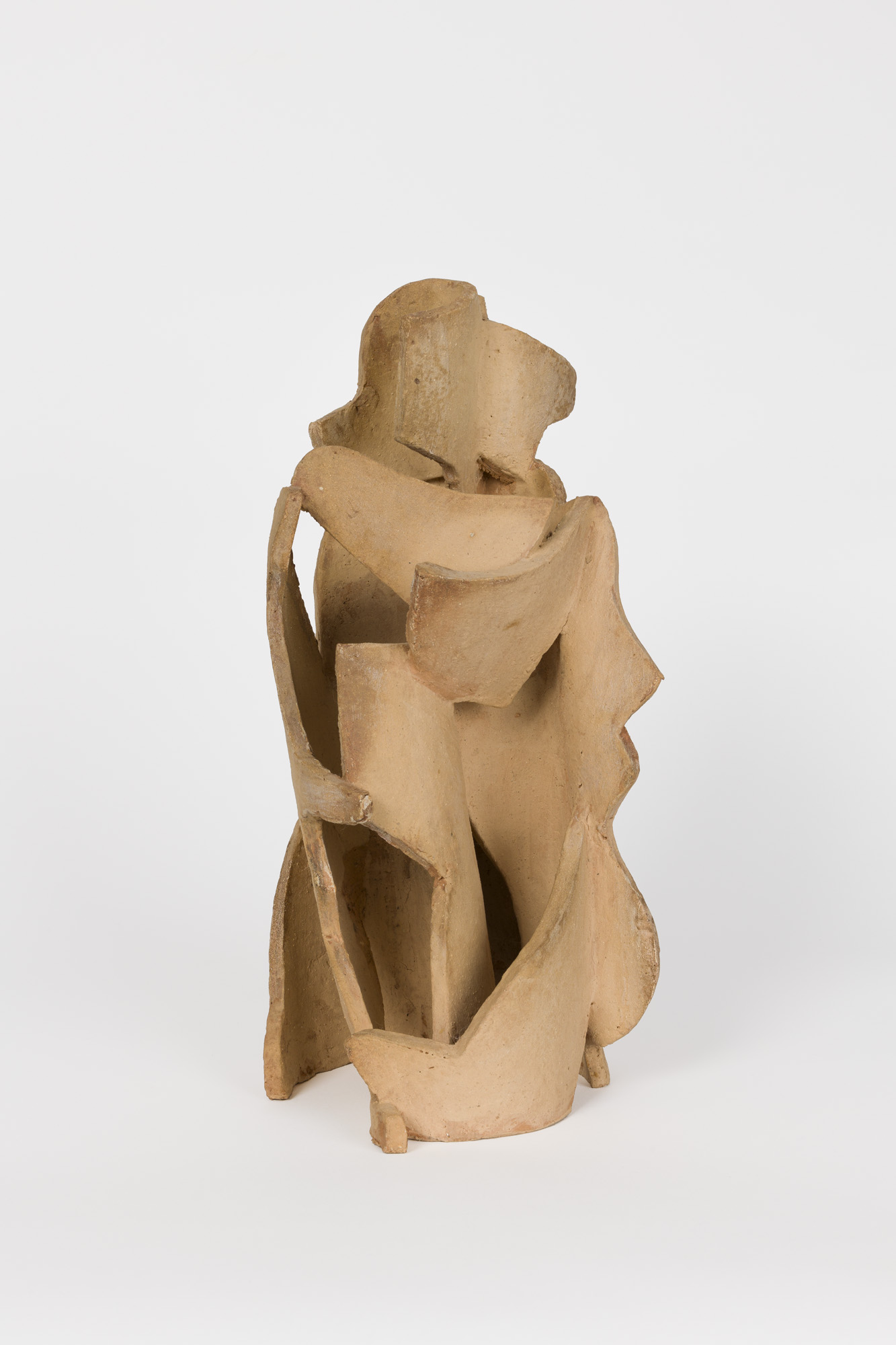
Peter Grippe (1912-2002). Untitled. 1934. Terra cotta. 16 x 8 x 8 in. The Marty O’Brien Collection of American Art.
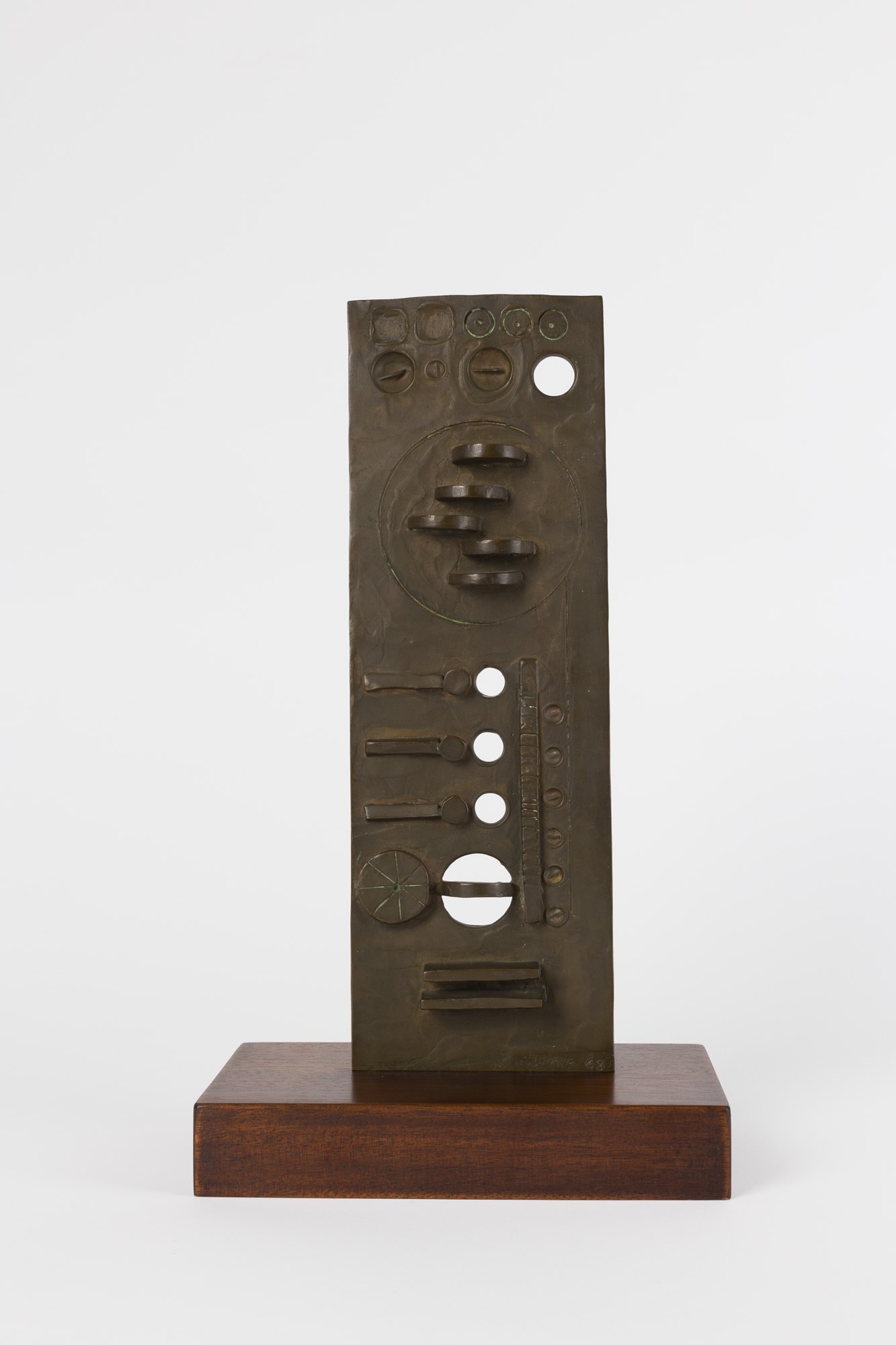
Dorothy Dehner (1901-1994). Bronze Sculpture. 1968. Bronze on wood base. 12 1/2 x 4 1/4 in. The Marty O’Brien Collection of American Art.
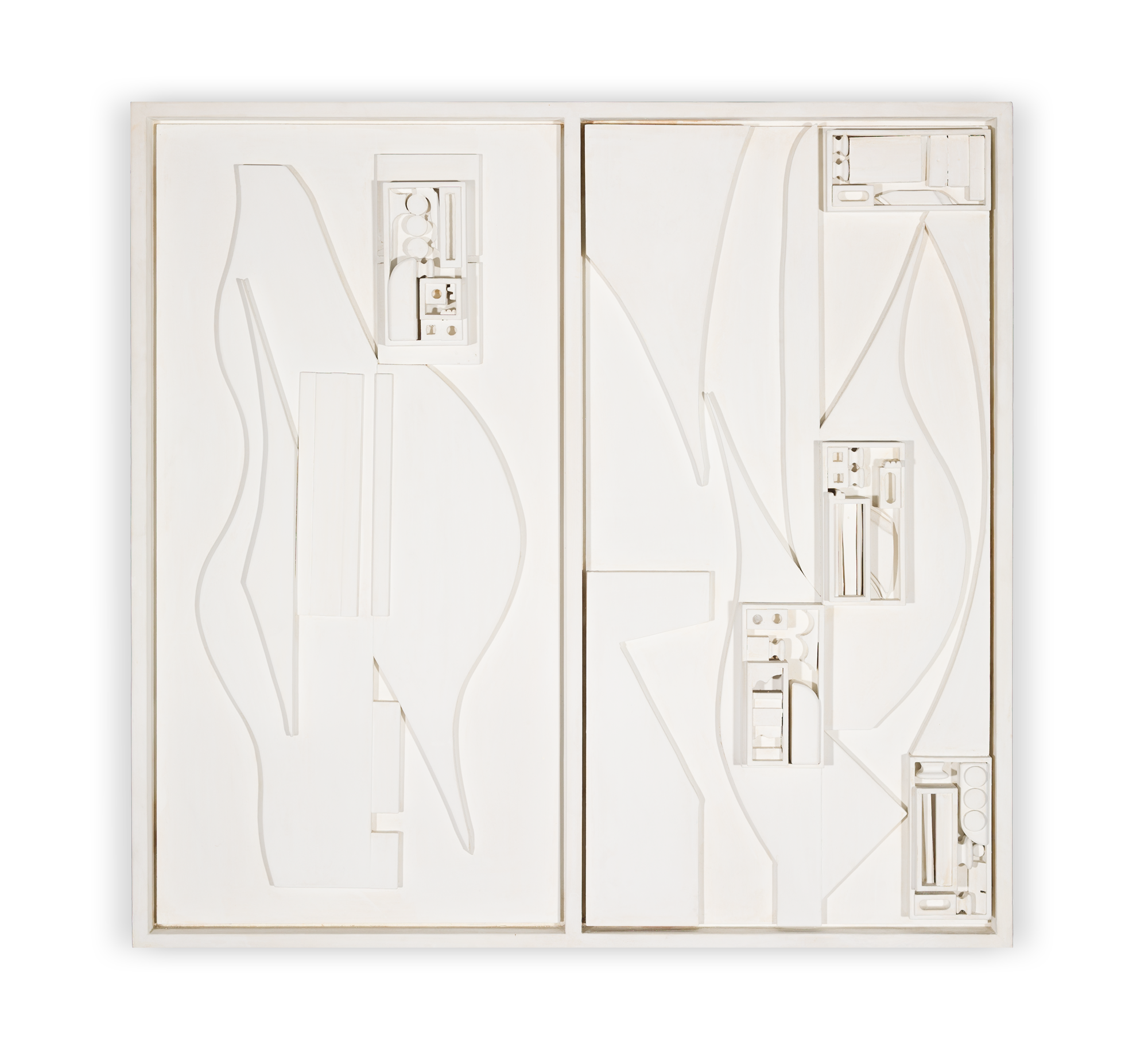
Louise Nevelson (1899–1988). Dawn’s Landscape XX (1975). Painted wood. 42 x 43 x 6 1/2 in. O’Brien Art Foundation.
Concurrently, artists engaged in geometric and constructivist abstraction explored the interplay of line, color, and spatial perception. Charles Biederman synthesized the principles of De Stijl and Russian Constructivism in reliefs such as String Relief (White and Blue) (1936), composed of nails, string, and painted collage on wood. These works respond actively to light and viewer movement, converting flat surfaces into dynamic, shifting spatial experiences. Other artists turned inward, exploring internal and organic forms—an approach also seen in the work of Leo Amino. Amino’s polystyrene constructions (Untitled, 1958) suggests both solidity and ethereality, manipulating light and void to create spatially responsive forms.
Richard Filipowski worked with industrial metal, but his visual language exemplifies a distinct merging of craft, machine, and modernist abstraction. A founding member of the New Bauhaus with László Moholy-Nagy in Chicago, his work demonstrated an approach that integrated the homespun and mass produced alike, including thread and kinetic plastics. His bronze and silver work Polish Grand Reunion (c.1960–1965) combines his iconic handwork with the precision afforded by new technologies, exploring structure and abstraction across sculpture and design.
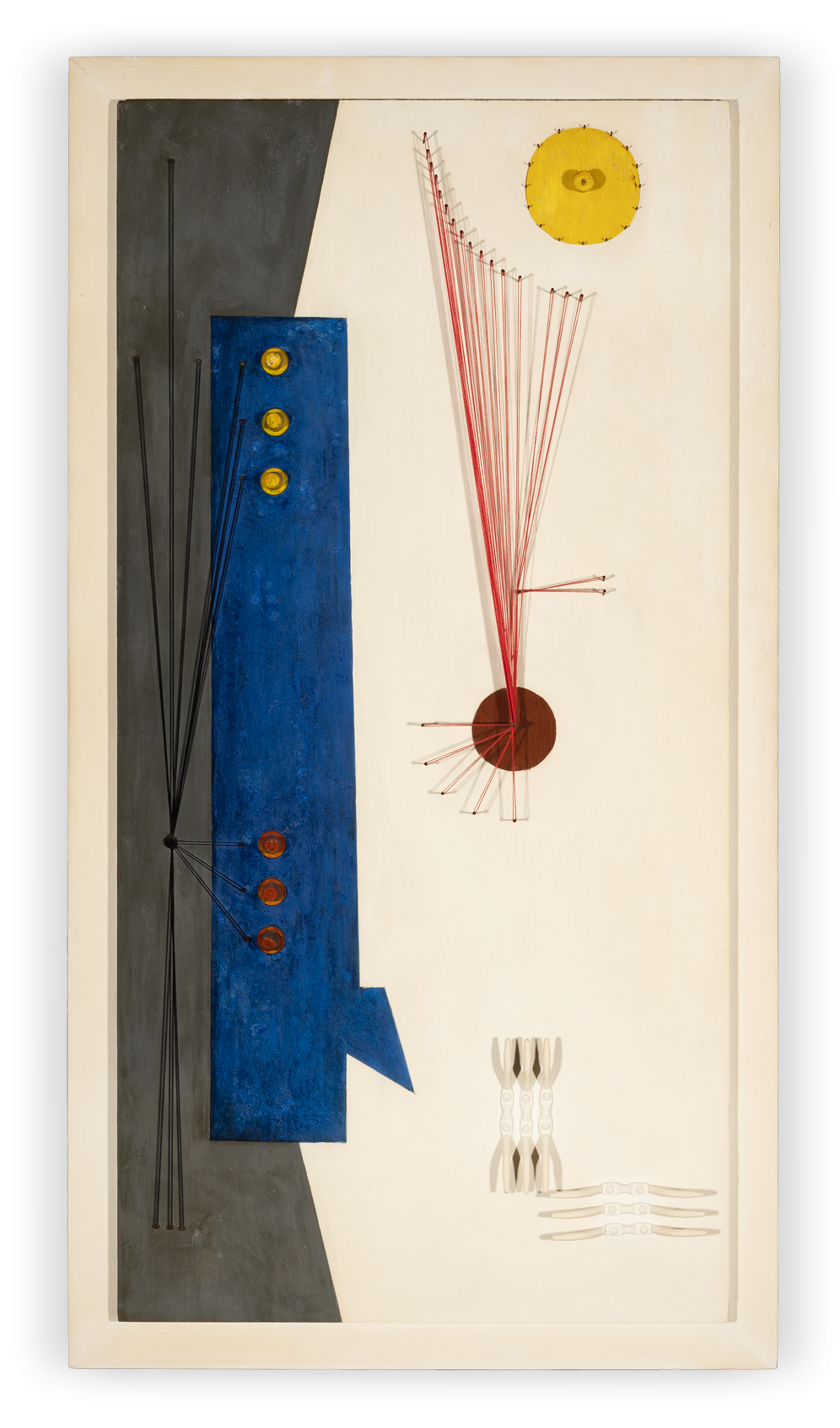
Charles Biederman (1906–2004). String Relief (White and blue). 1936.
Oil paint, string nails and collaged elements on wood board. 52 x 28 x 1 1/2 in. The Marty O’Brien Collection of American Art.
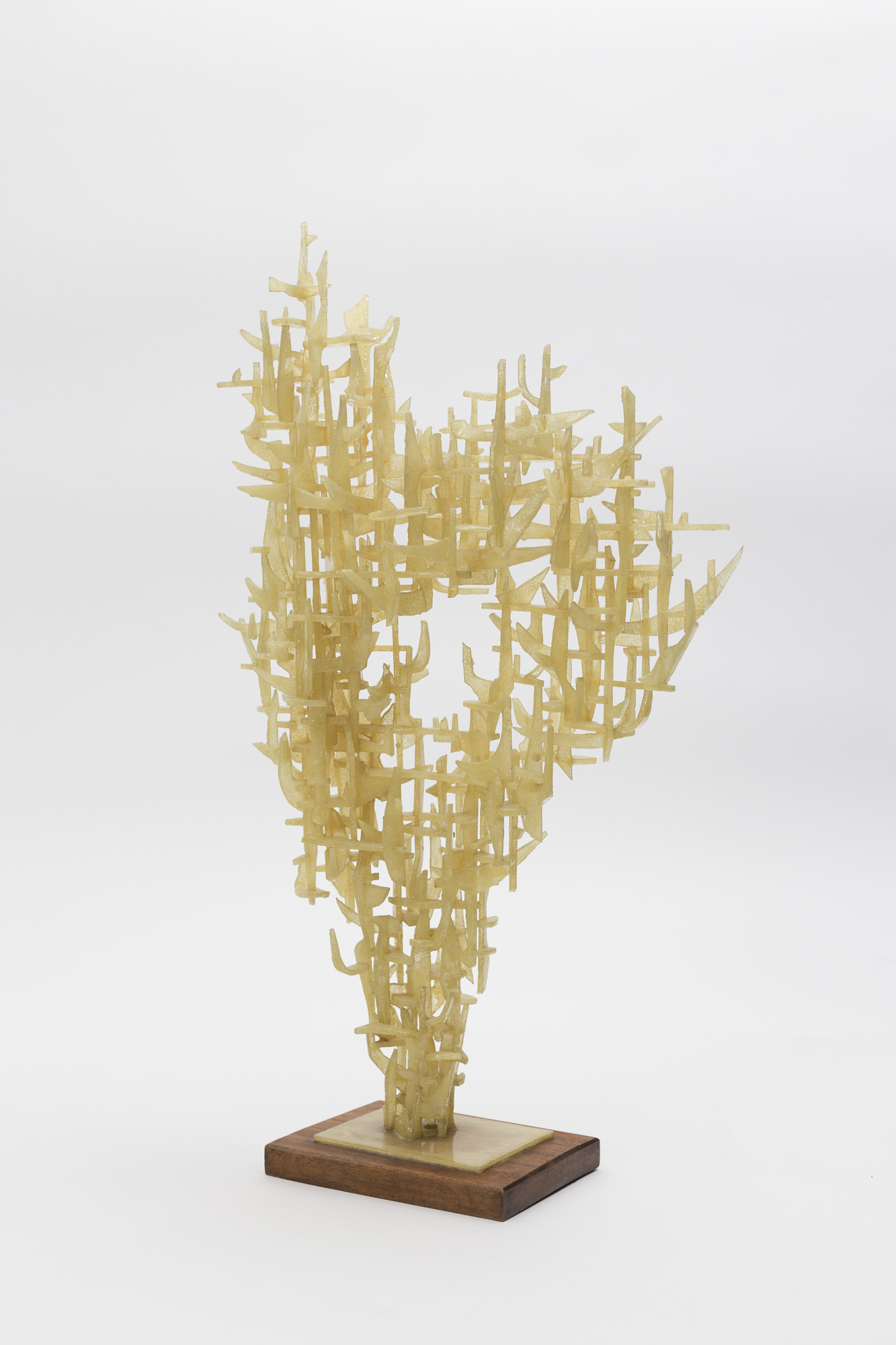
Leo Amino (1911–1989). Untitled. 1958. Polystyrene with wood base. 25 x 15 1/4 x 5 in. The Marty O’Brien Collection of American Art.
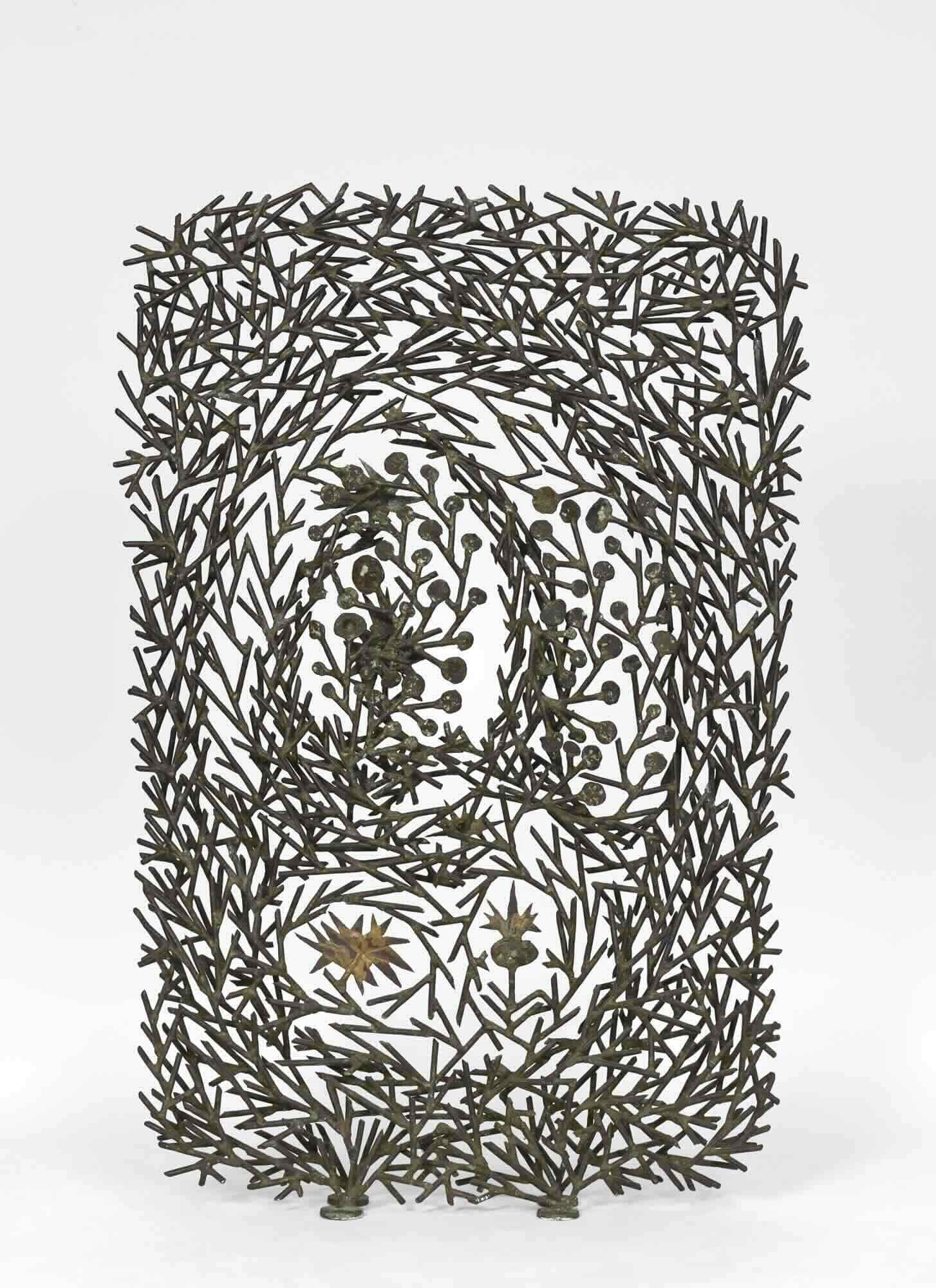
Richard Filipowski (1923-2008). Polish Grand Reunion. c.1960-1965. 43 x 30 x 2 3/4 in. Phosphor bronze and silver. The Marty O’Brien Collection of American Art.
Other artists, like Gérome Kamrowski, looked internally, integrating biomorphic, Surrealist-derived forms with kinetic and sculptural explorations. His mixed-media box construction Lost Time (1942) combines collage with three-dimensional surfaces. Across his career, Kamrowski expanded into plywood panels, shaped forms, and mosaics, often responding to environmental movement and light. Hannelore Baron pursued a more intimate, psychological engagement with material, transforming wooden boxes into objects that evoked memory and vulnerability, and processed intergenerational trauma resulting from the Holocaust Untitled (1983). Baron’s surfaces—stitched repairs and totemic forms—make visible the act of containment, the effort to hold or protect lived experience and private psychological space.
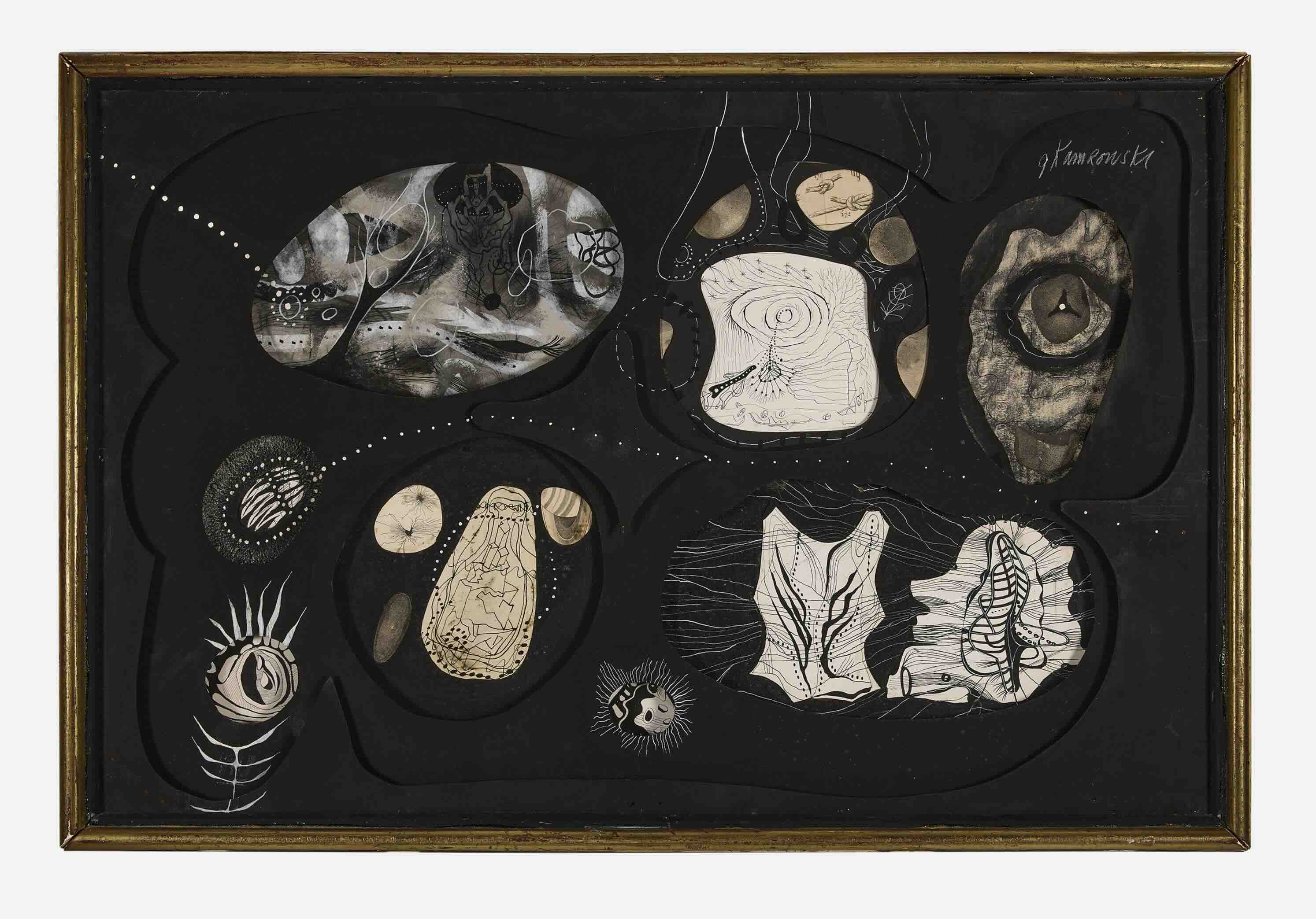
Gérome Kamrowski (1914–2004). Lost Time. 1942. Mixed media box construction with collage. 24 1/2 x 31 1/2 x 2 in. The Marty O’Brien Collection of American Art.
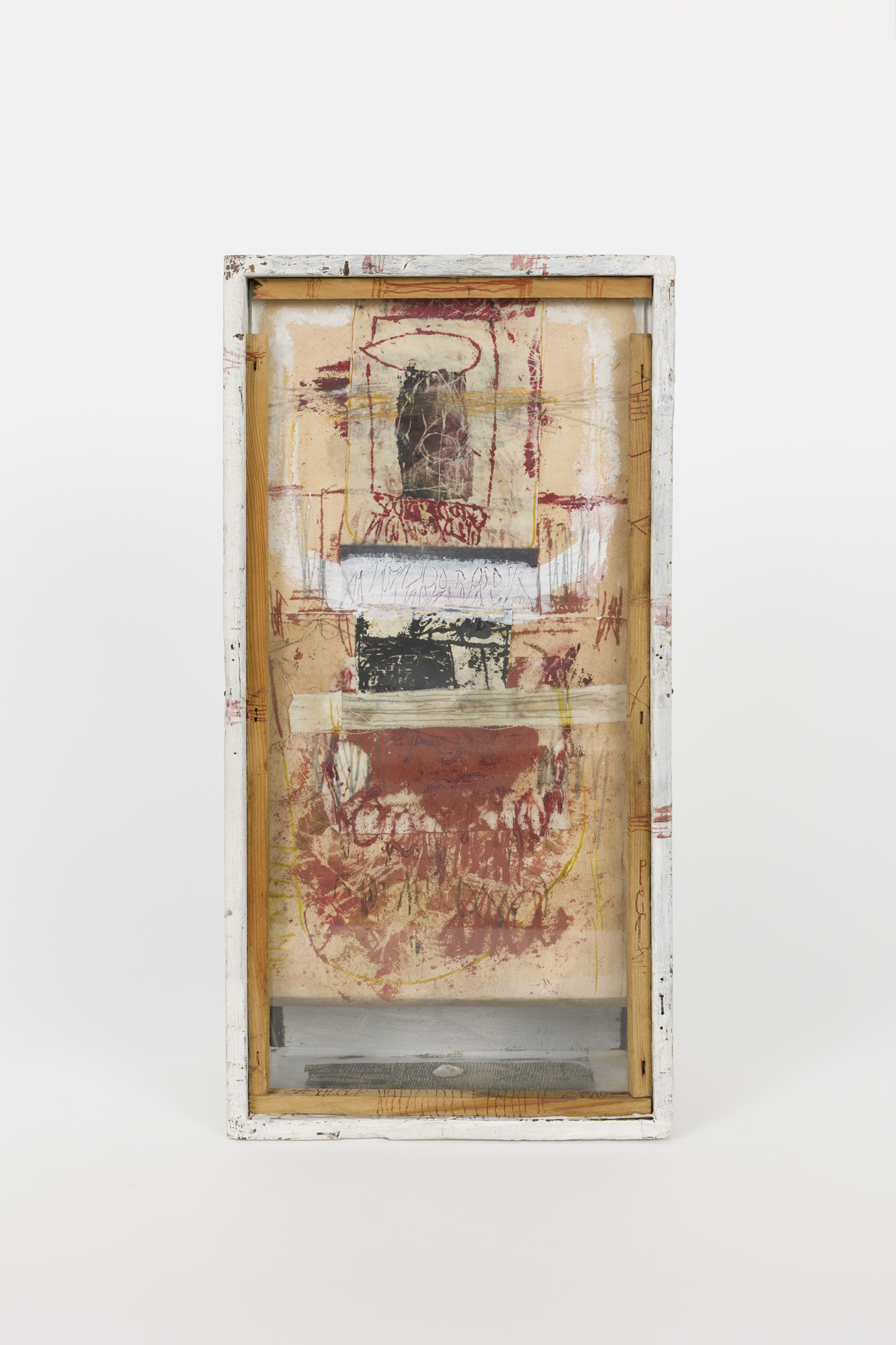
Hannelore Baron. Untitled. 1983. Mixed media box assemblage. 13 ½ x 7 ½ x 4 ½ in. O’Brien Art Foundation.
Together, these artists created a legacy in which unexpected materials and aspects of contemporary life made their way into the art object […].
The embrace of found materials further expanded the expressive range of American abstraction in three dimensions, looking more to the outside world, beyond art and art’s own identity, unlike typical modernist abstraction. Abe Ajay combined wood, resin, wire, and found objects in wall-mounted reliefs such as Construction #201 (1963), blending architecture, color, and geometric repetition. Sculptors in the 1960s, adjacent to the rise of Pop, brought the everyday into seemingly formal compositions.
Clarence Holbrook Carter, for instance, employed recurring ovoid and egg-shaped forms in chalky white plaster constructions in Egg Crate 2, 1963. Robert Lepper similarly extended material experimentation into wood, aluminum, and industrial supports. Lepper introduced the first industrial design program at Carnegie Mellon (then Carnegie Tech) in Pittsburgh, where he taught Andy Warhol—a storied teacher-student relationship in which Lepper was said to introduce Warhol to the Campbell’s Soup can. Together, these artists created a legacy in which unexpected materials and aspects of contemporary life made their way into the art object, not quite symbolic but not representational: new dimensions in between the objects of craft, industry, and modernity.
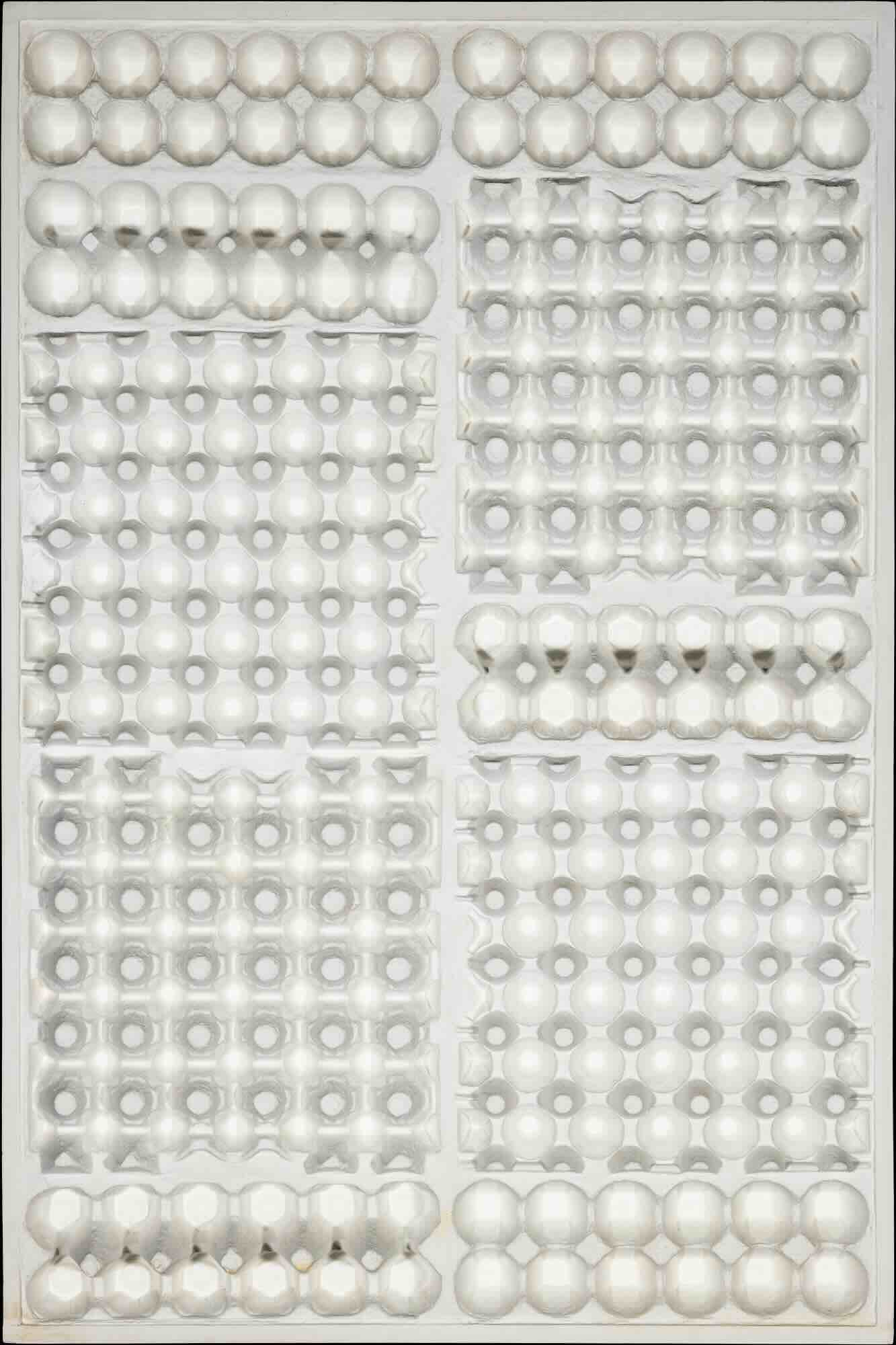
Clarence Holbrook Carter (1904-2000). Egg Crate 2. 1963. 37 x 24 in. Plaster construction. The Marty O’Brien Collection of American Art.
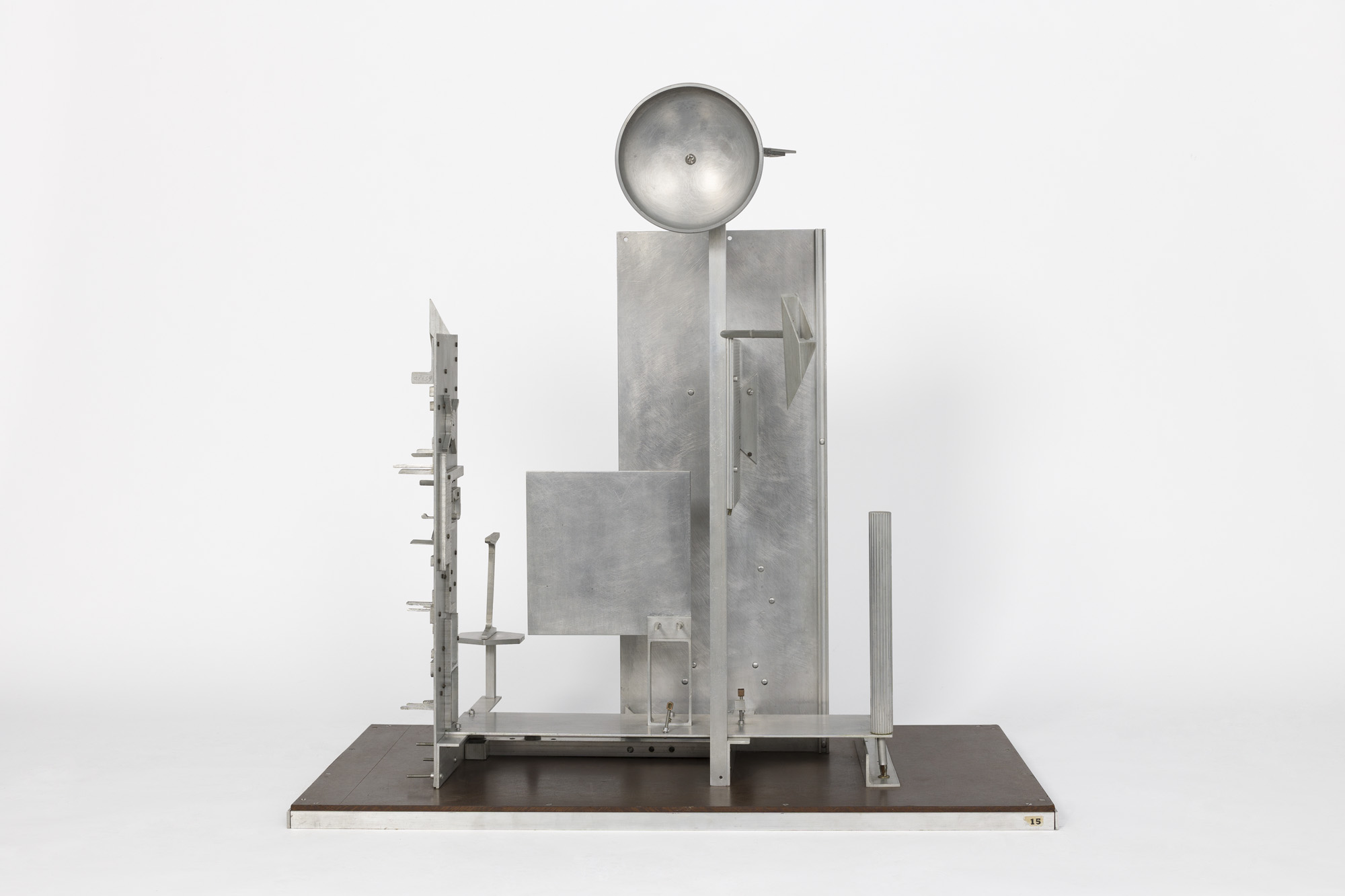
Robert Lepper (1906–1991). Untitled. c. 1950. 31 1/4 x 32 1/4 x 18 in. Aluminum, masonite, brass crews, nuts. The Marty O’Brien Collection of American Art.

