2025 Fall Seasonal Newsletter from the O’Brien Art Foundation
Dear Friends and Colleagues,
This season we’re inspired by our neighboring organizations in the immediate vicinity and wider American landscape. While the Foundation is engaged in the growth, scholarship, and preservation of our own collection, our work ultimately extends with reciprocity to scholars and museums across the country. Through these exchanges, from lending to exhibitions and making research pilgrimages, we aim to expand scholarship on the many regionalisms that shape American art of the 20th century.
On the local front, we are proud lenders of four major works by Pittsburgh-born mixed-media sculptor Sue Fuller (1914–2006) to the recently opened Wavelengths exhibition at the University Art Gallery at the University of Pittsburgh. We are also participating in The Generative Museum, an online exhibition at the Institute for Contemporary Art at Carnegie Mellon University, which will open its doors in 2027.
Over the course of the past several months, our travels also carried us to Madison and Beloit, Wisconsin, weaving together visits, collaborations, and discoveries tied to the world of American printmaking. Finally, our newest Featured Artwork and Collection Story focus on artists exploring new dimensions of American art in three-dimensional works made with materials of industry, craft, and in-between. These brief essays accompany a number of new website design updates that will make it easier to navigate our resources.
Well wishes for a healthy and happy Autumn,
Marty O’Brien
Founder, Board President & Treasurer
Wavelengths | University Art Gallery, University of Pittsburgh | Through Jan 26
We are thrilled to lend four works by Sue Fuller (1914–2006) to Wavelengths, an exhibition currently on view at UAG, University of Pittsburgh. The four artists in this exhibition—Aaronel deRoy Gruber (1918–2011), Josefa Filkosky (1933–1999), Sue Fuller (1914–2006), and Jane Haskell (1923–2013)—all of them women, were major players in Pittsburgh’s modernist network in the mid-to-late twentieth century. Fascinated with the visual order and material precision of industry, they used the materials of the factory floor and new technologies to make innovative abstract sculpture, often in three dimensions.
Curated by Brittany Reilly, Executive Director of the Aaronel deRoy Gruber Foundation and Alex J. Taylor, Associate Professor, History of Art & Architecture at the University of Pittsburgh. Presented by the University Art Gallery with generous support from the Marstine Family Foundation.

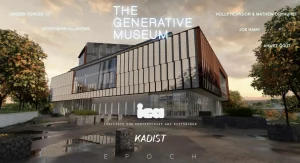
The Generative Museum at Institute for Contemporary Art (ICA) Pittsburgh
We are delighted to participate in The Generative Museum, an experimental project that invites audiences to explore the future galleries of ICA Pittsburgh at Carnegie Mellon University in the virtual realm as construction continues on its new home in the Richard King Mellon Hall of Sciences. The space is projected to open Fall 2027.
In an imaginary landscape, visitors can curate exhibitions in real-time through AI prompts that source works from international and local collections. One of 11 Pittsburgh area-based collectors invited to contribute, the Foundation lent 14 post-war works to the virtual exhibition by such artists as Joe Overstreet (1933–2019), Mavis Pusey (1928–2019), and Marina Stern (1928–2017).

Mavis Pusey (1964-2019). Shadows in the Fog. Lithograph. 14 3/4 x 18 1/2 in. The Marty O’Brien Collection of American Art.
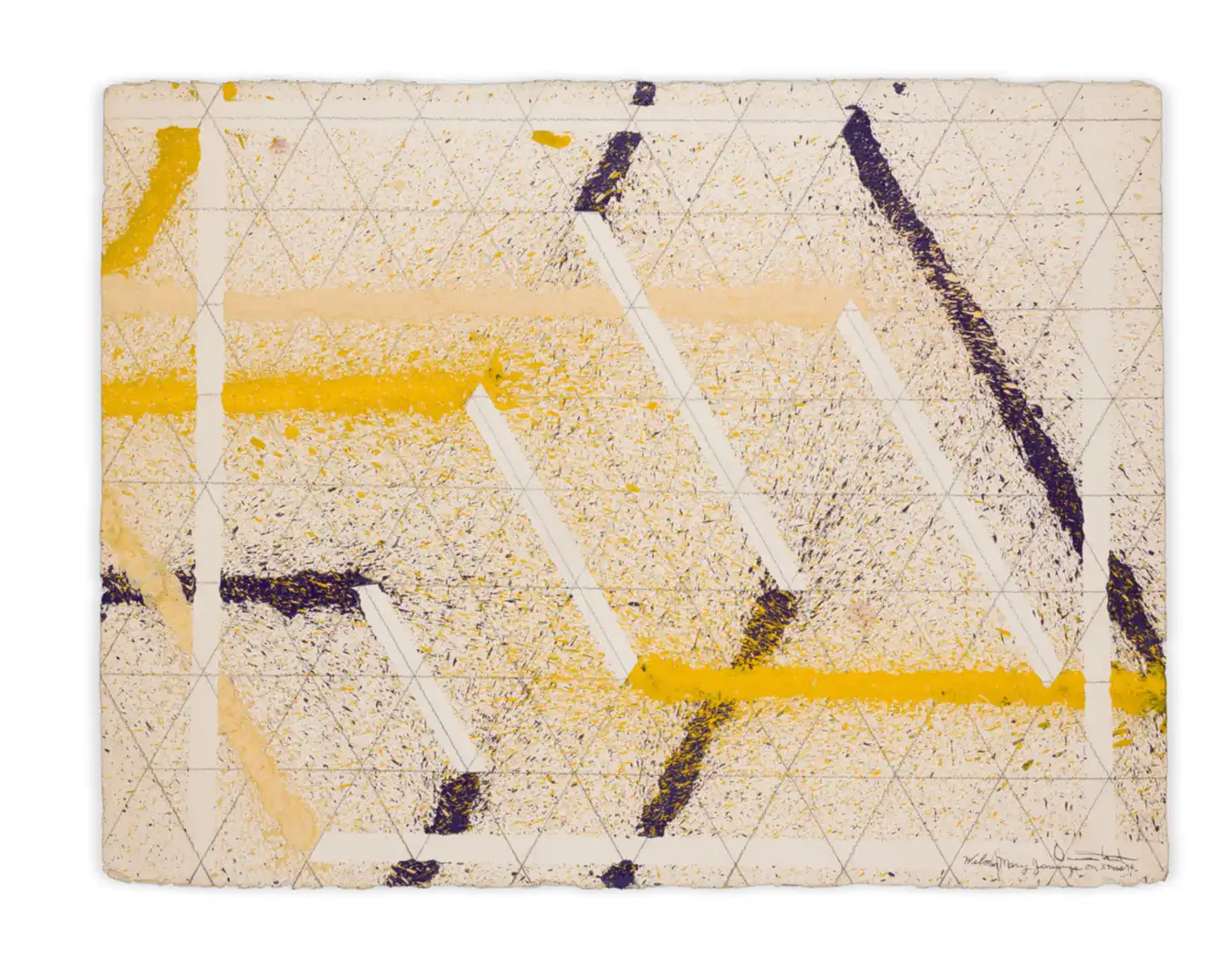
Joe Overstreet (1933–2019). Untitled (Wilmer/Mary Jennings on Xmas). 1974. Acylic and graphite on paper. 22 1/2 x 30 in. The Marty O’Brien Collection of American Art.
Research and Collaboration in Wisconsin
This past season, the Foundation organized a trip to top Wisconsin universities to conduct historical research and meet with colleagues about upcoming collaborations. In a group that included Foundation Board Director Chris Walther and Duluth, Minnesota-based print collector Robert Leff, we visited the pioneering art department at the University of Wisconsin-Madison. This included an opportunity to meet with the family of artist-educator Warrington Colescott (1921–2018), including his daughter Lydia Colescott and grandson, Adam Scott. We also engaged with collectors and estates connected to historic artist-educators of the university, including Dean Meeker (1920–2002), Frances Myers (1936-2014), Alfred Sessler (1909–1963), and Santos Zingale (1908–1999). Additionally, we met with living artist Jack Damer who was a former professor in the university’s art department and recently the subject of a major monograph, Jack Damer: Prints/Drawings/Objects (2025), written by Larry List & Thomas Cvikota.
We then made our way from Madison to the Wright Museum of Art at Beloit College, which generously donated two sculptures by Louis Weinberg (1885–1964) to the Foundation. At the Wright, we met with Academic Curator Christa Story, with whom we’re collaborating on a 2027 exhibition highlighting women artists who worked at Atelier 17 in New York with Stanley William Hayter during World War II and Post-War. Building on these connections, the Foundation looks forward to more strategic acquisitions and future programmatic partnerships.
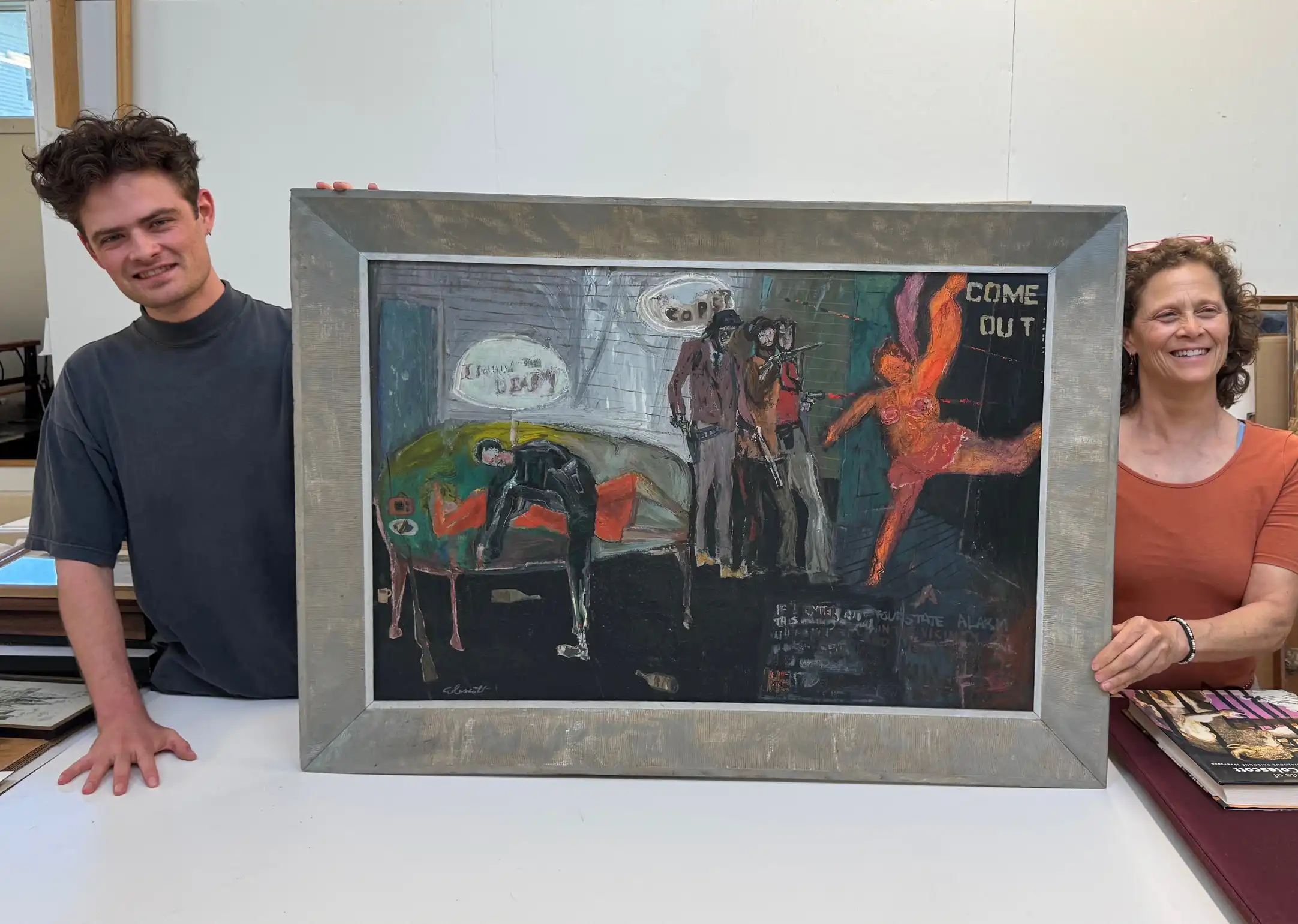
Adam Scott (grandson) and Lydia Colescott (daughter), family of Warrington Colescott (1921–2018). Pictured with Come Out. c. 1970. Oil on Masonite. 24 x 36 in. O’Brien Art Foundation.

Left to right: Christa Wright, Chris Walther, Robert Leff looking at Louis Weinberg (1918–1959). Flail Refugees. 1956. Steel. 30 1/8 x 11 3/4 x 4 3/4 in. O’Brien Art Foundation.
Collection Story
New Dimensions: Objects of Industry, Craft, and In-Between
A new essay looks at American sculptors of the 20th century who transformed abstraction into three-dimensional form, incorporating new and traditional materials in the face of the radical technological and cultural shifts of a war-torn, increasingly automated age. These experiments yielded not passive, static objects but highly responsive forms that explored materiality and immateriality, light and tension, air and touch as entry points into psychological space, haptic perception, and the built environment.

Gérome Kamrowski (1914–2004). Lost Time.1942. Mixed media box construction with collage. 24 1/2 x 31 1/2 x 2 in. The Marty O’Brien Collection of American Art.
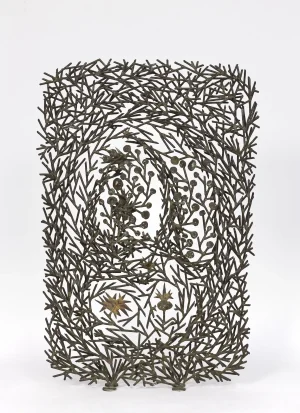
Richard Filipowski (1923-2008). Polish Grand Reunion. c.1960-1965. 43 x 30 x 2 3/4 in. Phosphor bronze and silver. The Marty O’Brien Collection of American Art.
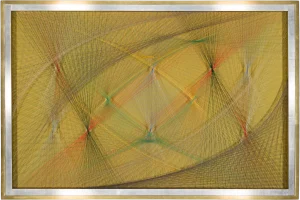
Sue Fuller (1914–2006). String Composition #44. 1953. 24 1/2 x 36 1/2 x 1 1/2 in. String on board backed with cloth and metal frame. The Marty O’Brien Collection of American Art.
Sue Fuller’s String Composition #44 (1953)
The work of Sue Fuller embodies midcentury Modernism’s fascination with touch and material transformation, elevating thread (once confined to domestic craft) into a medium of structural clarity and perceptual investigation. Born and raised in Pittsburgh, Fuller first encountered modern art through the Carnegie International. She later studied at the Carnegie Institute of Technology and at Stanley William Hayter’s Atelier 17 in New York, where she absorbed the idea that experimentation itself could be not just a process but a mode of seeing.

The O’Brien Art Project Foundation (DBA O’Brien Art Foundation) is a charitable organization under Section 501 (c)(3) of the Internal Revenue Code. The Foundation is located in the Pittsburgh, Pennsylvania area. We are dedicated to the preservation, understanding, and appreciation of American Art beyond the accepted canon.

